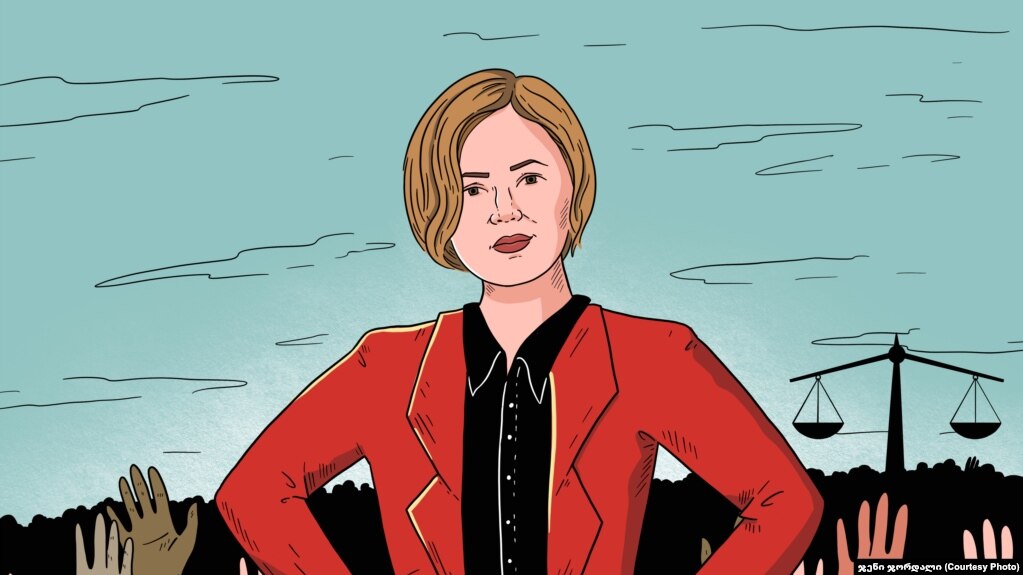

I had my own deepfake. As a politician, perhaps, I should announce that with honor, since not every politician receives the attention to have adversaries produce a dedicated deepfake. After all, this is a costly enterprise both in terms of money and time. This is the fate of the chosen ones. I say this with sarcasm, of course, although not completely, because in politics, as oddly as it may sound to an outsider, negative publicity is also a form, and in some situations, a valuable form of publicity.
In any event, my own deepfake prompted me to think about how deepfakes might lead to the increased importance of trust in specific politicians, their values and their messages.
I was alerted to my deepfake by a supporter who sent me a message in May 2024. She encountered my deepfake on social media. My full body image was used to advertise for investing in the Azerbaijan owned Oil Company SOCAR in the Russian language. This was well into the Russian- Ukrainian war. Speaking Russian for a mainstream politician was considered unacceptable. Very strong pro Ukraine and anti war sentiments have been dominant with polls consistently showing staunch support of Ukraine. 87% of polled believed that the war against Ukraine was a war against Georgia as well.
In this environment video of a well-known politician speaking fluent Russian and advocating for Russian language speakers to invest in an oil company would damage the reputation. My team flagged the video quickly and it was taken down swiftly, avoiding large circulation. The supporter who alerted me to the deepfake video noted that that the video was improbable to the extent that it was funny. I had helped her family in relation to the predatory lending and eviction case and she was very familiar with my politics. I was very grateful for this message.
At the same time, the case prompted me to contemplate about the effects of the deepfakes on politics and politicians from my own personal perspective. There are many discussions on the governance of deepfakes. Various technologies are being developed to identify and to flag deepfakes quickly. States take various measures in relation to deepfakes, including blanket bans (China) and civil law approaches (US). Denmark and Netherlands are the latest countries that might approach deepfakes from the perspective of copyright law. Relevant proposals have been tabled in the respective Parliaments. However, the effect of deepfakes on politics remains understudied.
I posit that the widespread availability of deepfakes and their use in politics will increase the importance of trust in politicians and in their personal brand. The relationship between resilience to deepfakes and trust in politics should be tested in a proper sociological study. In a nutshell, however, “Trust” has been defined by Robert Putnam as “is citizens’ confidence in political institutions and actors to act competently, fairly, and in the public interest.” Deepfakes strike the core of the public’s trust in politicians. They often carry the message and actions of a politician that goes counter to their expressed values, public messages and positions. This aims to damage the bond of trust between the politician and the constituency, to attack the politician’s reputation, consistency and reliability of their positions Consider, for instance, the well known video of the President of Ukraine Volodymyr Zelensky calling on Ukrainians to surrender at the start of the war in Ukraine. This position went against the official stance and militant spirit of Ukraine’s leader and aimed at frustrating the fighting spirit of the population. As far as we know it, that deepfake did not have any effect.
At this moment, unfortunately, trust in politics has been declining across the democratic world. Numerous polls conducted recently indicate that public’s trust in politics and political establishment is low. Political deepfakes can feed on these low levels to attack, to damage politicians and their message further. The moment to attack is ripe, when the ground that the politician is standing on is wobbly.
Therefore, alongside various technologies and governance mechanisms to respond to deepfakes, we should be thinking about the ways to increase the trust in the politicians and to strengthen the bonds of trust between them and public. If and when the trust is high in the politician’s values, deepfakes will most probably fail in their primary objective: confusing the constituencies.
 Anna Dolidze
Leave a comment